
Crown's National Economic Contribution

14.06.2024 - 09:17
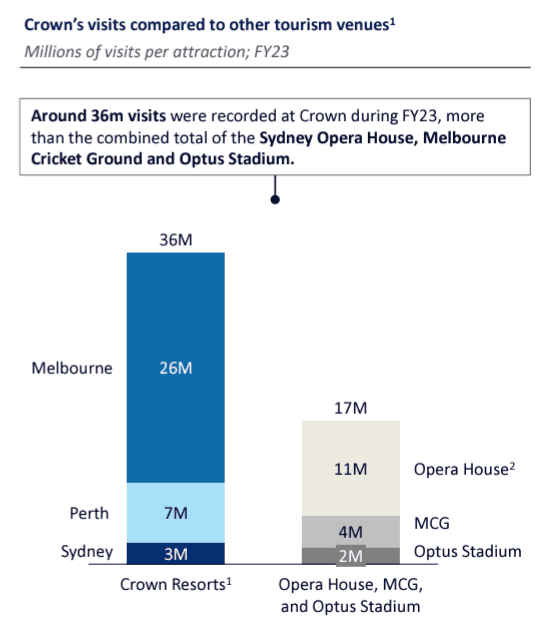
Mandala's latest report, commissioned by Crown Resorts, highlights the significant contributions of Crown to Australia's economy and society. Annually, Crown injects nearly $5 billion into the economy, including $527 million in taxes that fund essential public services like education, health, and infrastructure. Crown supports local businesses by spending $1 billion with 3,900 suppliers, 83% of which are small and medium enterprises. As the largest hospitality employer in Australia, Crown provides jobs for nearly 30,000 people, fostering a diverse workforce. Crown's resorts attract 36 million visitors annually, bolstering Australia's status as a premier tourism destination. Through Crown College, the company trains the next generation of hospitality professionals, with 10% of Certificate III graduates in key cities. Additionally, Crown has donated $83 million to charities and community initiatives, demonstrating a strong commitment to social responsibility and community support.
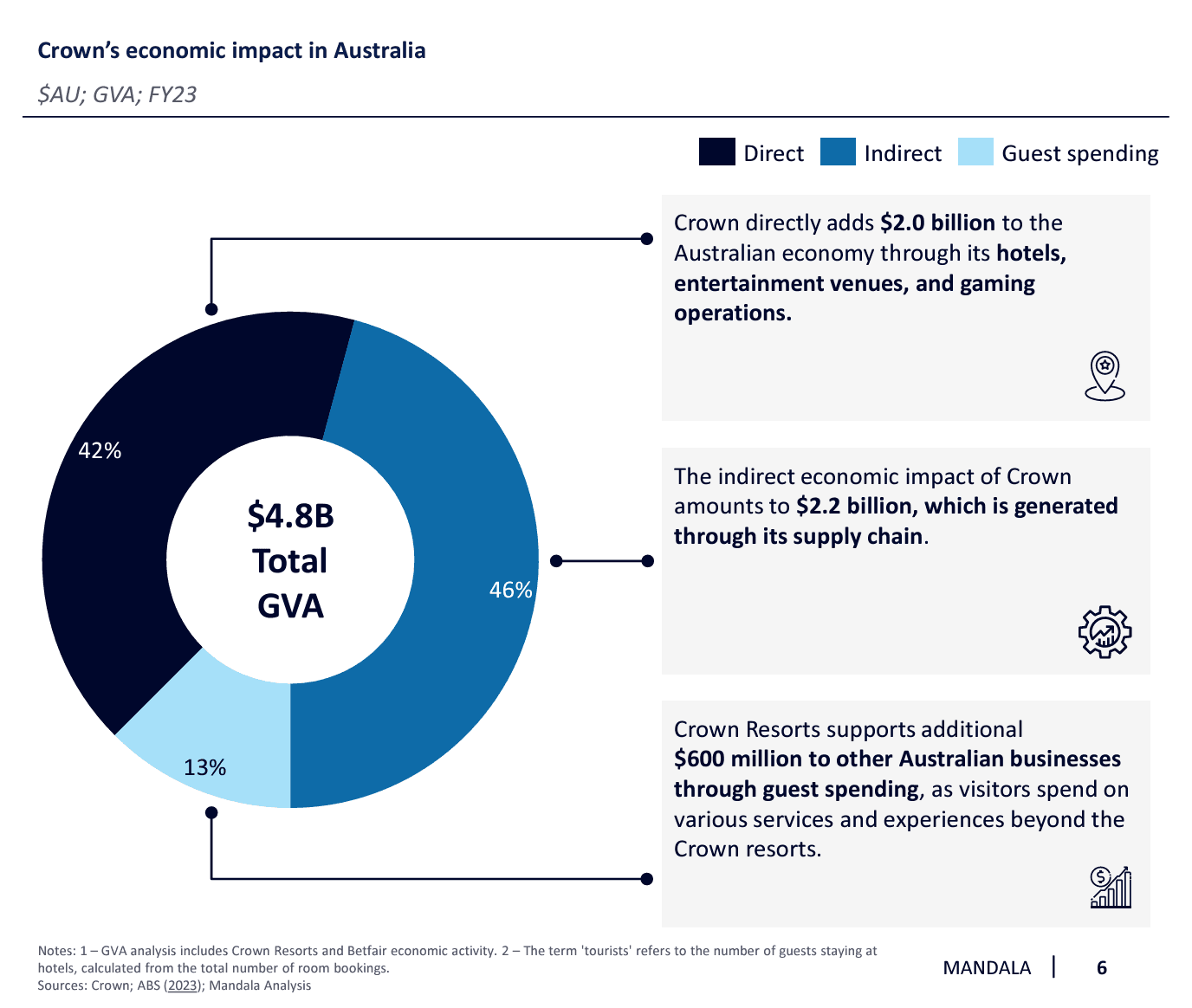
Crown contributes $4.8b in gross value added to the Australian economy
In FY23, Crown contributed $4.8 billion in Gross Value Added (GVA). This was made up of $2.0 billion in direct activity, $2.2 billion in indirect activity, and $600 million through its visitors.
Crown’s $2.0 billion direct contribution represents the additional value added to the economy through its resort operations. This includes hotel accommodations, restaurants and bars, various events at Crown’s venues, and gaming operations. The direct contribution represents the value to the economy created by labour and capital inputs, employed directly by the resorts (i.e., EBITDA plus wages).
Crown also supports an additional $2.2 billion through indirect economic impact. This is reflected through Crown’s expenditure across other Australian businesses. The indirect impact is estimated using input-output multipliers for each resort operation: Restaurants and bars, hotels and events, and gaming operations.
Furthermore, Crown supported an extra $600 million in GVA to other Australian businesses through guests’ spending. Annually, 1.4 million tourists visit Crown’s venues, and their expenditure contributes to turnover in other Australian businesses. This contribution is assessed by applying the average tourist spending profile in Australia to the GVA to turnover ratio.
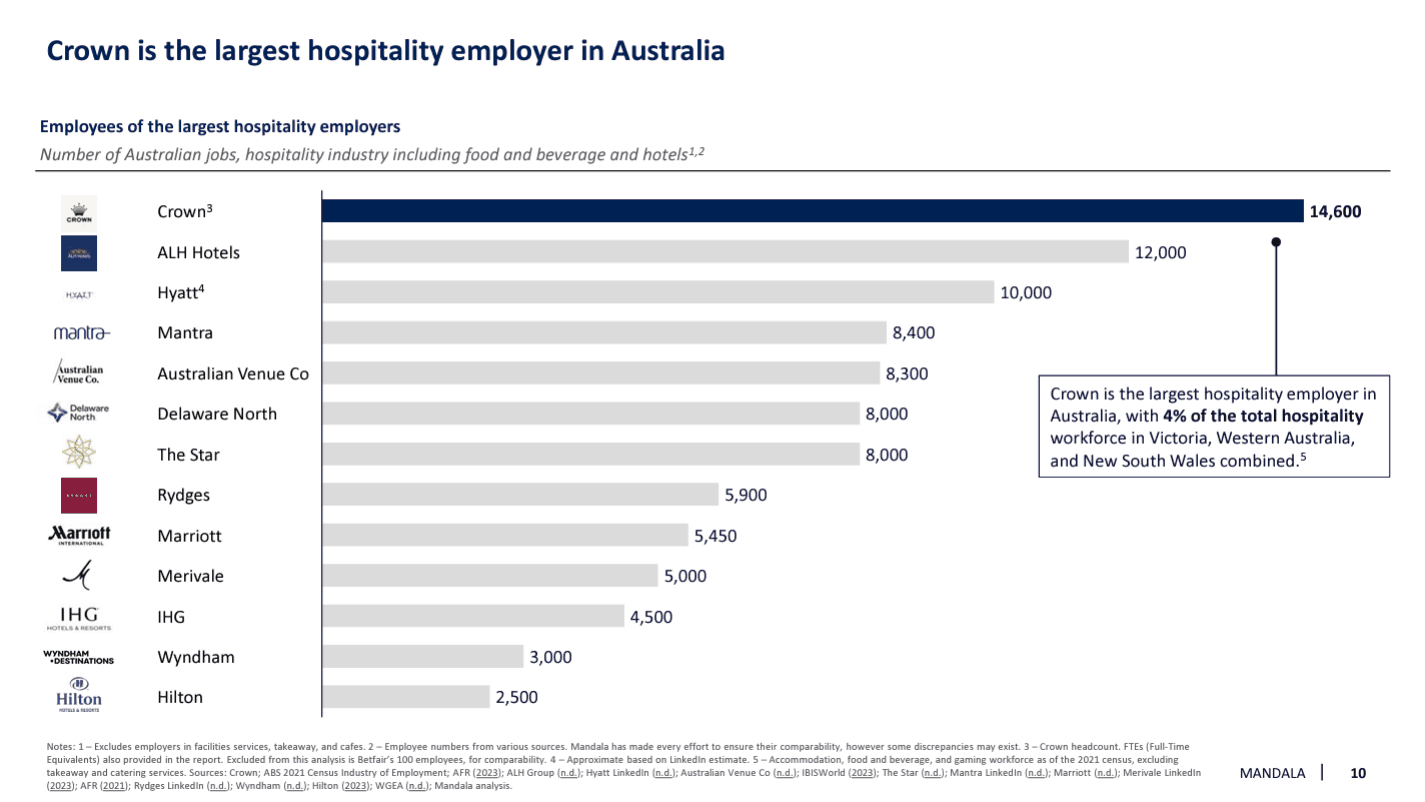
Crown is the largest hospitality employer in Australia, and is one of the largest hospitality training providers in Australia
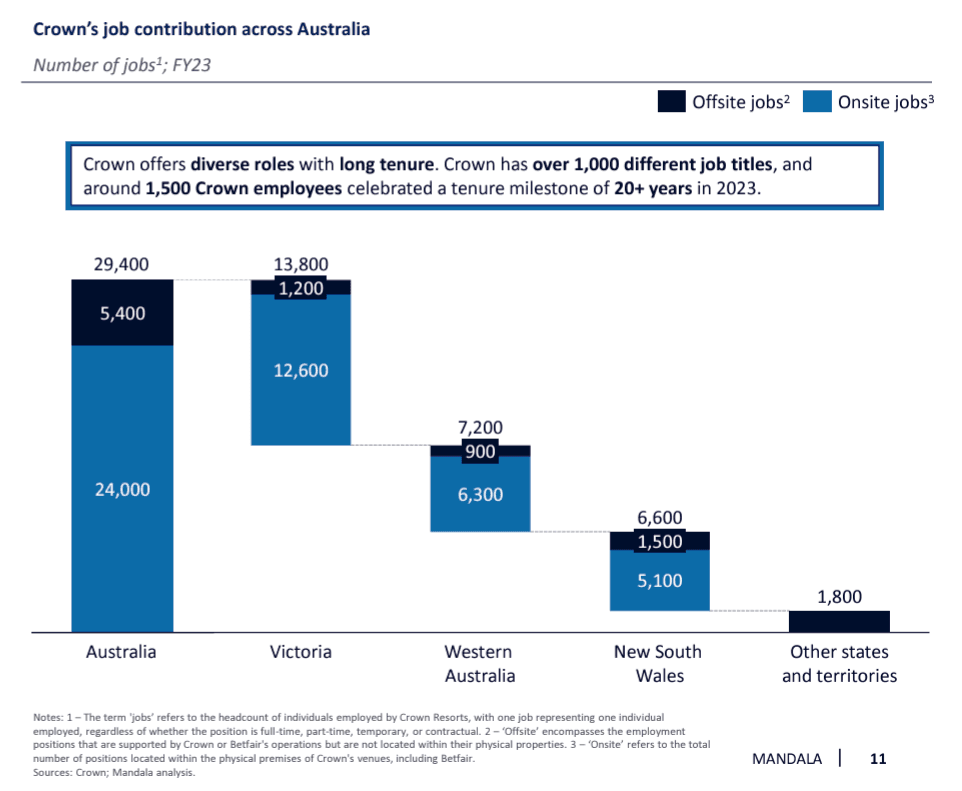
Crown provides 24,000 onsite job opportunities within its venues and supports 5,400 additional offsite jobs nationally.
Onsite jobs include the 14,700 people directly employed by Crown and 8,300 additional people sub-contracted to work at Crown’s venues. An extra 1,000 people work at Crown’s 60 tenancies, such as retail stores and entertainment venues across the properties.
As well as the jobs at Crown venues, Crown supports another 5,400 jobs around the nation. These are roles that are created as a result of Crown’s spending in the economy, at businesses spanning from food and beverage suppliers, to maintenance and technology providers.
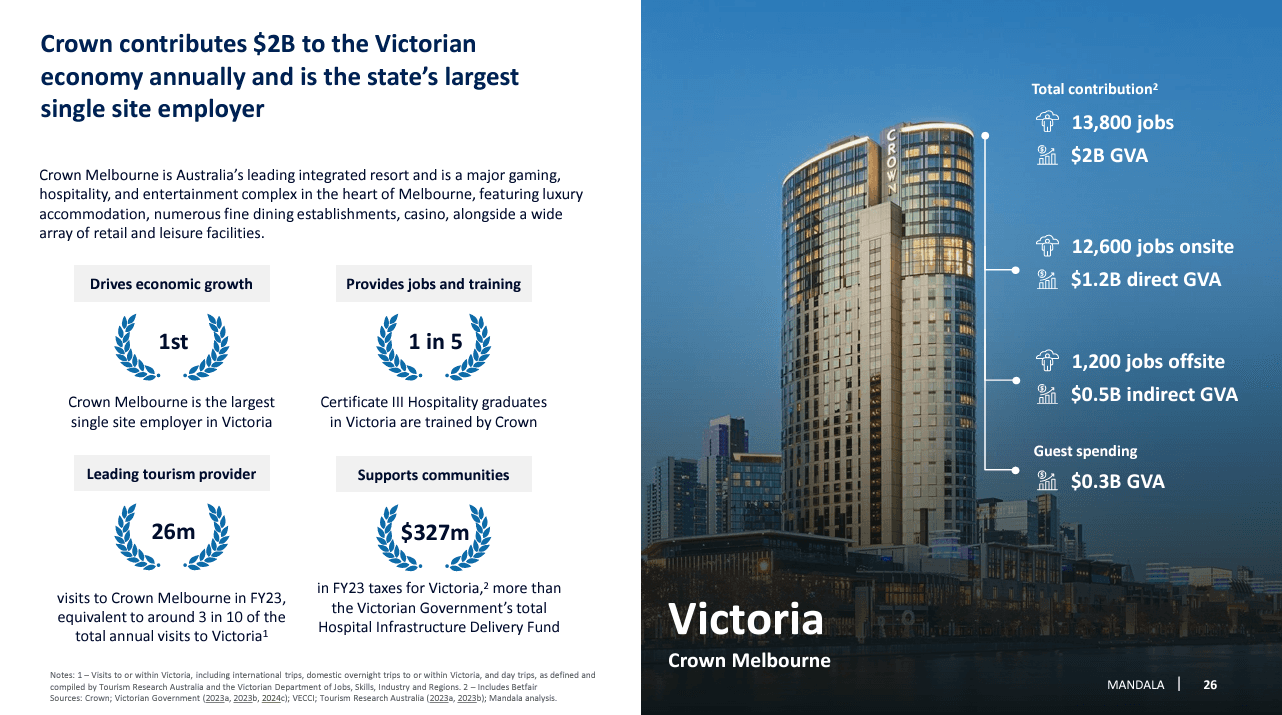
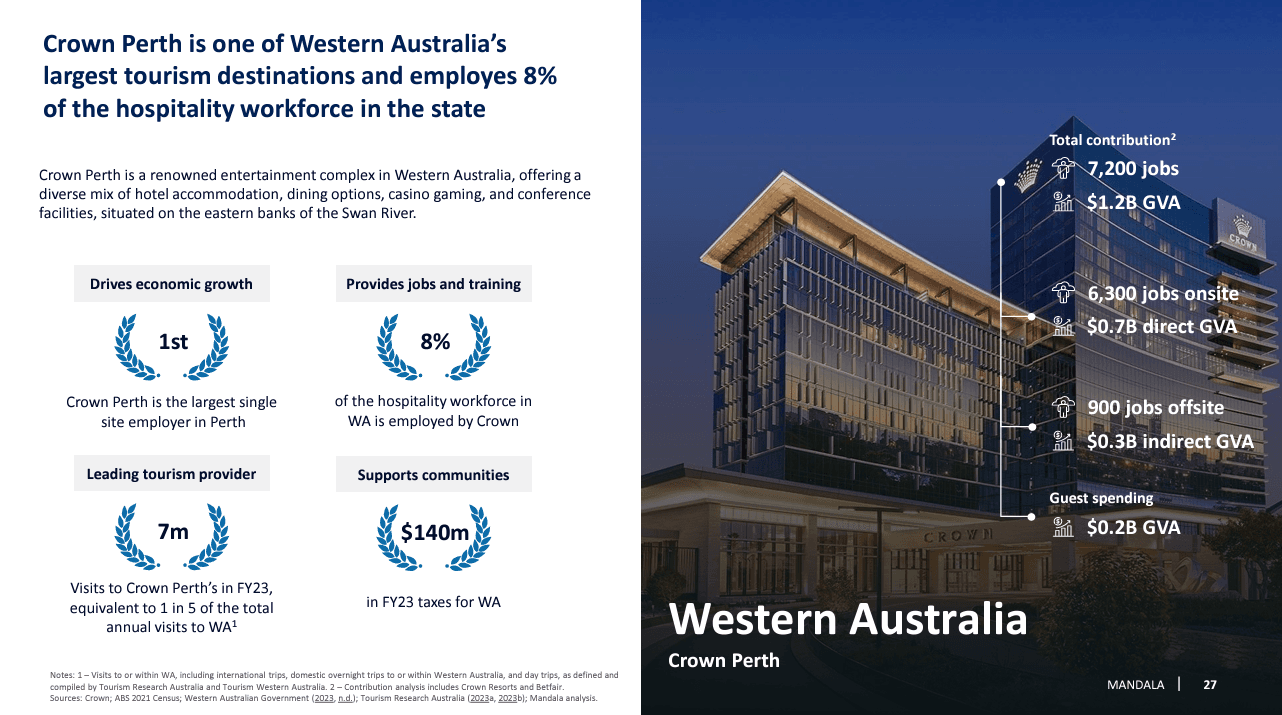
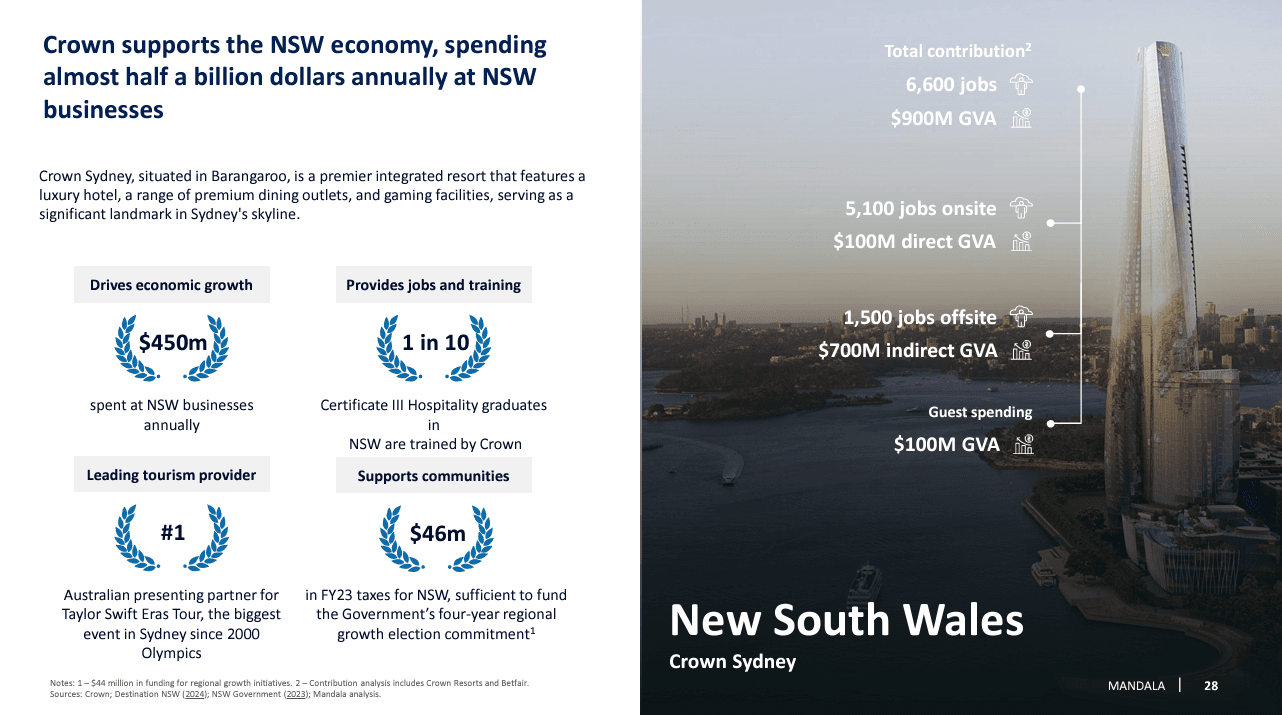
Almost half the jobs supported by Crown (47%) are in Victoria, with 12,600 onsite. New South Wales has the greatest number of offsite jobs (1,500), as it is home to many of Crown’s suppliers.
Crown employees enjoy diverse, long-term roles and opportunities. Crown offers careers in hospitality (37%), gaming (26%), accommodation (14%), and corporate functions, and an average tenure of seven years.
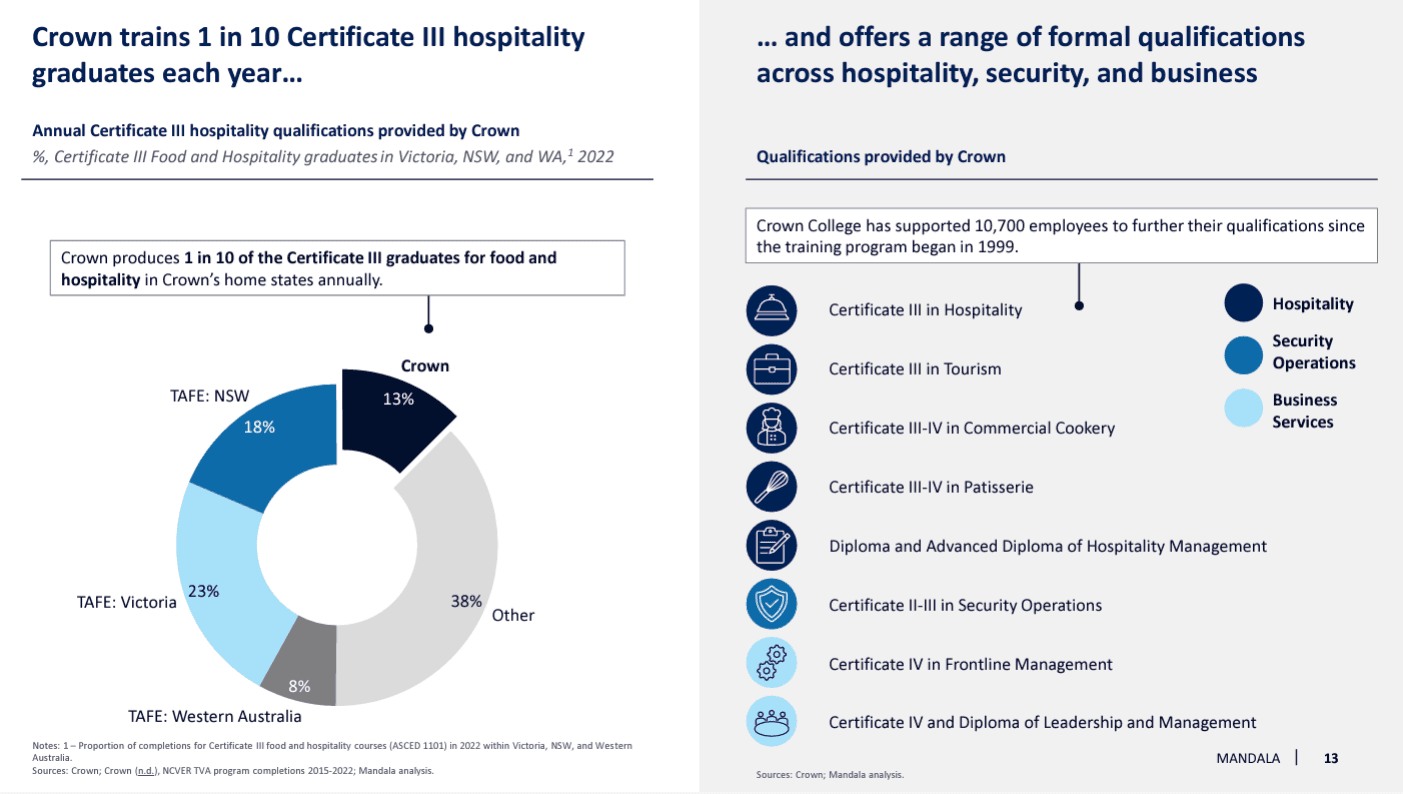
Crown provides a crucial contribution to the hospitality industry through ongoing training and employment
Crown’s contribution to the hospitality industry through training employees and students is particularly important given the significant hospitality workforce shortage.
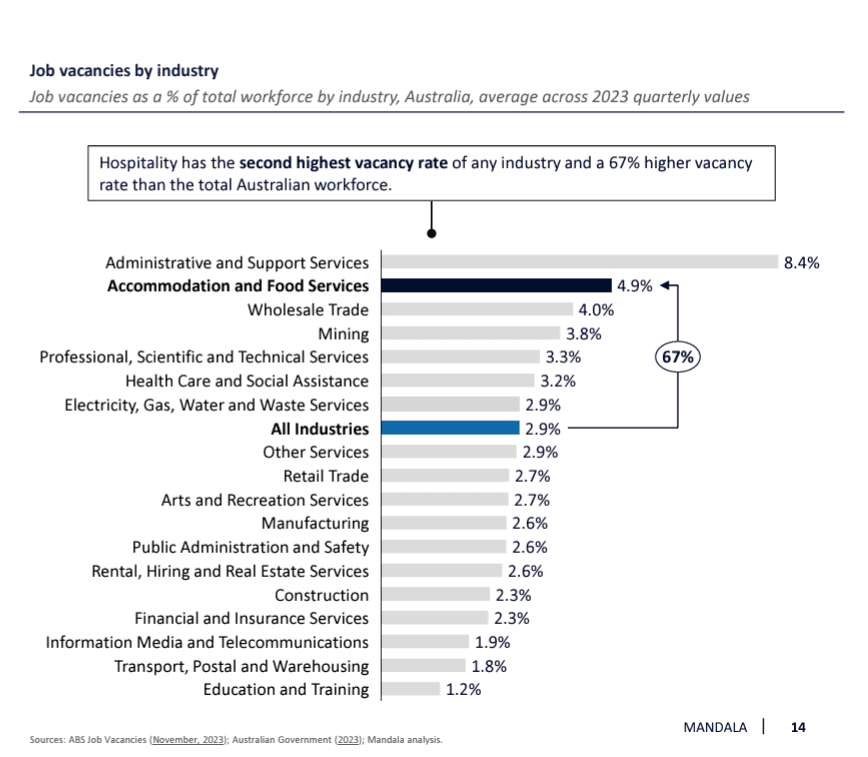
In 2023, Australia had a shortage of hospitality workers, with on average around 45,000 job vacancies – or 4.9% of all accommodation and food services jobs – throughout 2023. As a result, hospitality has the second highest vacancy rate of any industry. Due to the shortage of workers, more hospitality employers are finding it difficult to recruit people given the lack of applicants.
Formal hospitality qualifications are one key element of addressing the hospitality workforce shortage. Crown’s training of hospitality graduates means more people will have the necessary skills to work in the hospitality industry.
Another key element of supporting the hospitality workforce is through employee training. Crown provides significant development opportunities for employees to upskill, expand their areas of expertise, and deepen their knowledge relevant to the hospitality industry.
Crown is Australia’s leading tourism provider, attracting millions of visitors every year
Crown is a key sponsor and host of Australian events, attracting visitors and supporting entertainment and hospitality offerings in Sydney, Melbourne, and Perth.
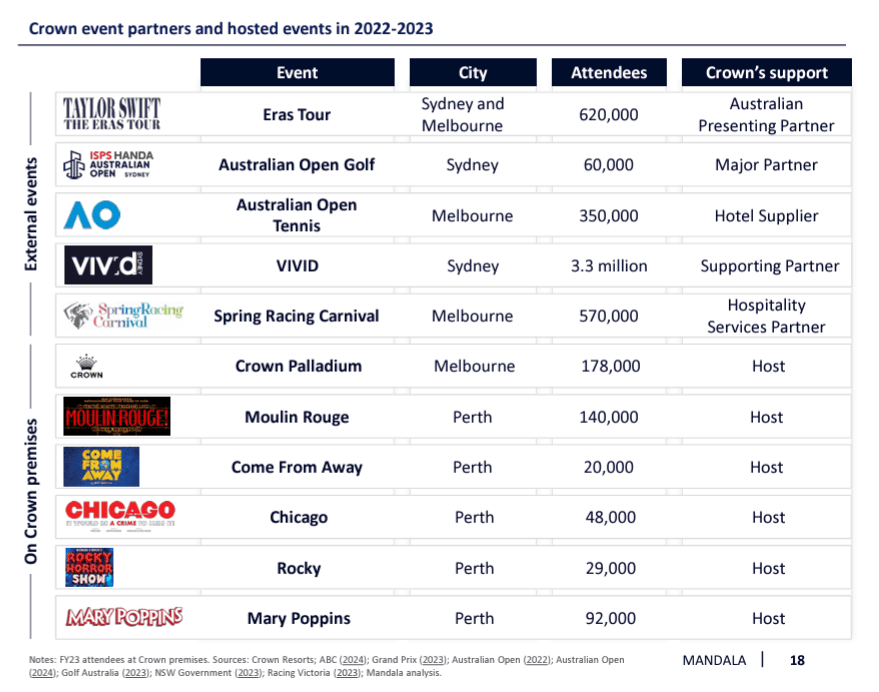
Crown supports major events, including as Australian Presenting Partner of the Taylor Swift Eras Tour, Major Partner of the 2023 Australian Open Golf, Hotel Supplier of the 2022 Australian Open for Tennis, Supporting Partner of VIVID in 2022 and 2023, Hospitality Services Partner of the 2023 Spring Racing Carnival, and host of a Mardi Gras installation on Wulugul Walk at Barangaroo. Between them, these flagship events have had millions of visitors, driving tourism within Australia.
Crown also hosts events within Crown Melbourne and Crown Perth. The theatre at Crown Perth saw millions of visitors during FY23 and is a key part of Perth’s entertainment offering. In addition, the Palladium at Crown Melbourne is the venue of choice for many of Australia’s most prestigious events, including the AFL Brownlow Medal.
Crown was the Presenting Partner of the Taylor Swift Eras Tour, one of the largest events in Australia’s history
Crown Resorts was the Australian Presenting Partner of the Taylor Swift | The Eras Tour, playing a key role in bringing one of the most globally significant entertainment events events to the country with almost 500,000 people attending concerts in Melbourne and Sydney.
$170 million was spent by domestic and international tourists attending the Eras Tour across attractions in Sydney and Melbourne. Airlines, public transport, retail and hospitality venues across the cities also saw significantly increased business – thanks to ”Swifties” in each city.

Crown operates the safest gaming venues in Australia, with world-leading responsible gaming practices
Crown is leading a global and national shift in gaming practices.
Crown’s approach includes initiatives such as:
• World-leading carded play: Carded play for EGMs, supporting safer gaming and reducing the risk of financial crime. Since its introduction at Crown Melbourne, Crown has had over 240,000 sign-ups. Over 4 million gaming sessions have ended within their set limits and nearly 99% of total sessions, with Crown providing the guardrails for guests to better manage their gaming behaviour and spending.
• Advanced transaction monitoring: Using automated transaction monitoring systems, Crown proactively identifies and investigates suspicious activity, preventing illicit transactions and protecting the integrity of its operations.
• Responsible Gaming practices: Crown prioritises responsible gaming, implementing a range of measures to educate and support patrons. These include the world-leading PlaySafe program, an online self-exclusion portal which is world-first for land-based casinos, and staff intervention training.
• Continuous improvement and collaboration: Crown evaluates and enhances its Responsible Gaming and Anti-Money Laundering programs, actively engaging with governments and regulators to align with industry standards and best practices and all our team members receive continuous training both in responsible gaming and Anti-Money Laundering.
Crown supports the community through its significant tax contributions, and through its philanthropic activity
Crown is one of the highest tax payers in the hospitality industry, with over $500 million in taxes paid in FY23
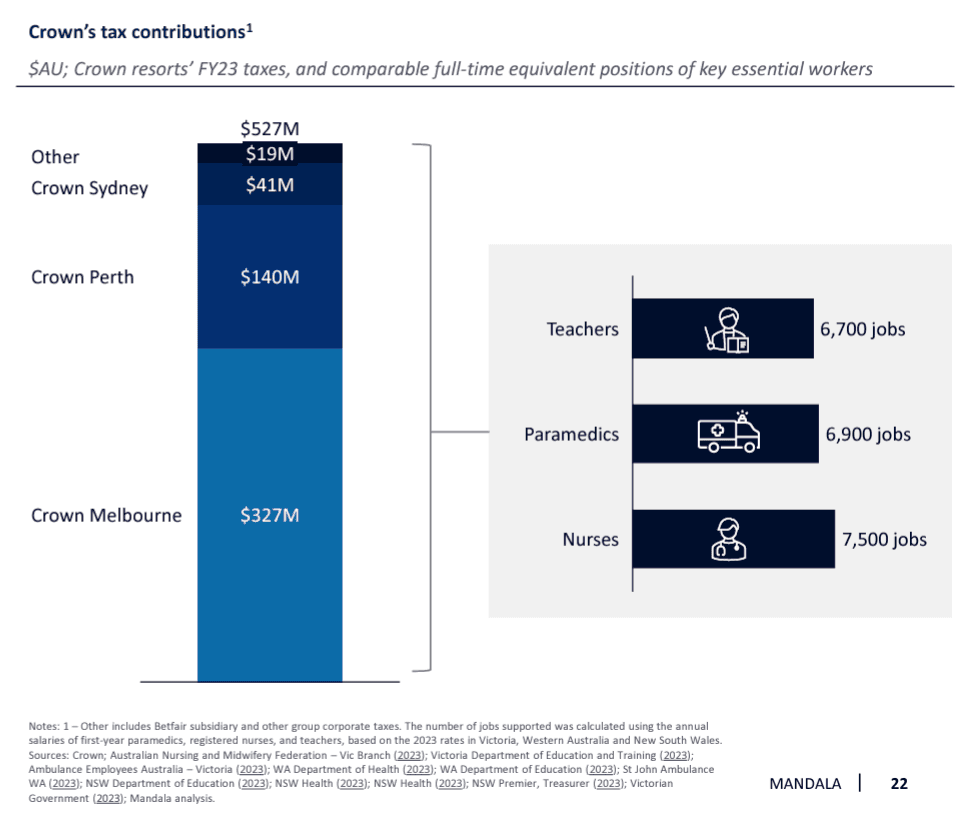
Crown pays both State and Federal taxes, including gaming taxes, payroll, property taxes, GST, as well as community levies.
Crown makes significant contributions to State budgets, which can be used to fund critical essential services. Crown’s FY23 tax contributions alone represents the value of salaries of 6,700 teachers, 6,900 paramedics, or 7,500 nurses.
Crown paid $19 million in community benefit levies as part of its tax contributions in FY23, which help to support local and regional communities.
Crown gives back to the community through enduring partnerships, donations and in-kind support
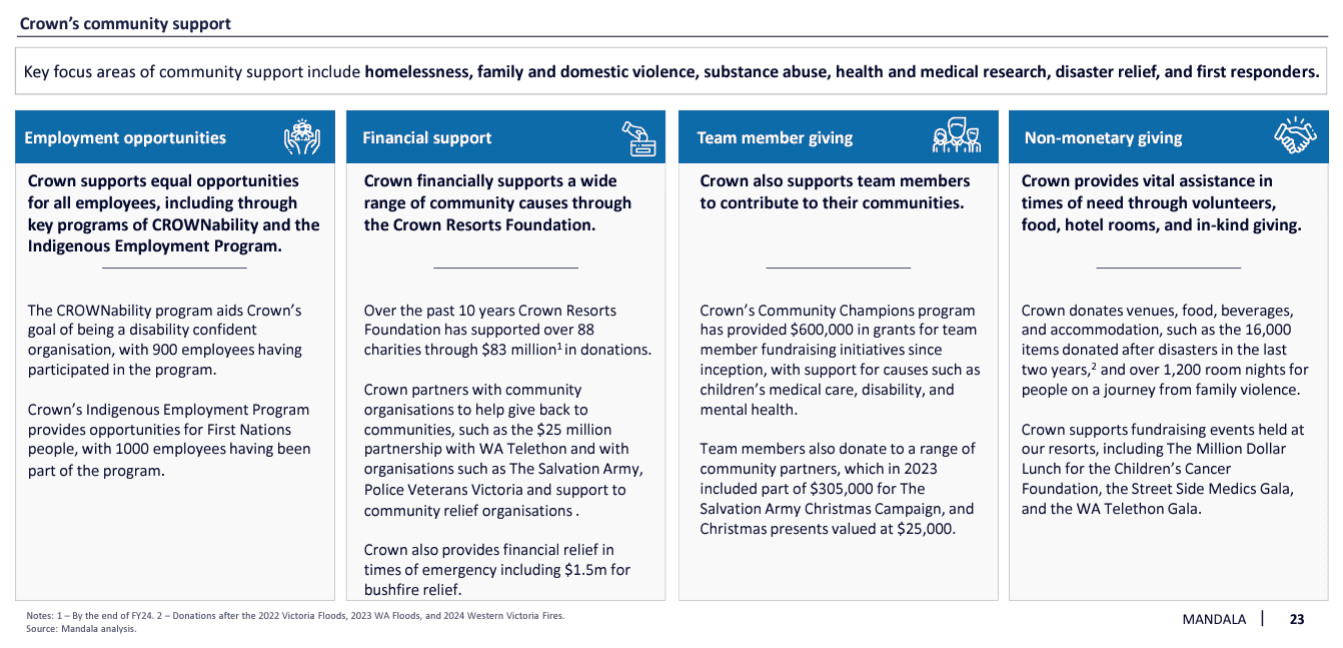
Crown proudly supports community organisations that provide essential services and aid to Australians in need
The partnership between Crown and The Salvation Army’s Project 614 has spanned almost 20 years, supporting homeless and vulnerable community members in Melbourne. Project 614’s café serves free meals to hundreds of people every week, providing a safe, supportive, inclusive and welcoming community.
Crown provides financial support, skilled volunteers, food and supplies for Project 614. Along with its other support, Crown has provided critical ongoing funding of $150,000 per annum which has enabled Project 614 to employ an outreach worker for services throughout Melbourne.
State analyses
Download the full report and methodology here.
Read our latest posts

The Stagnant Nation: Lifting Australia’s Dynamism
Australians are going backwards on real wages and income. Real wage growth has fallen from 0.6 per cent in the 2000s to -0.7 per cent today, the slowest rate since the 1990s recession. Weak productivity growth is a key driver. Productivity growth has dropped from 2.2 per cent in the 1990s to just 0.1 per cent today. The Productivity Commission has pointed to declining economic dynamism as one cause for weak growth, with fewer businesses starting, growing and competing. We confirm declining economic dynamism across five key dimensions and estimate that reversing this decline seen since the mid-2000s could see a GDP uplift of $101 billion per year over the next decade. Our analysis finds that regulation could account for around 20 per cent of declining dynamism. Reducing regulatory burden to late-2000s levels could see GDP uplift of at least $20 billion per year over the next ten years.
7 Oct, 2026

Demonstrating the economic benefits of Airwallex in Australia
Mandala's latest research, commissioned by Airwallex, quantifies the direct and indirect economic benefits of Airwallex in Australia. Airwallex supported $4.6 billion in economic benefits in 2025, a figure roughly equivalent to 2 per cent of the Australian tech sector's contribution to GDP. Of this, $2.5 billion flows directly to platform businesses through productivity gains, new market access and cost savings, with the remainder reaching the broader economy as those benefits move through customers' supply chains. Airwallex supports 29,000 jobs across the Australian economy, and a quarter of economic benefits flow to regional, rural and remote areas. Small and medium businesses capture the largest share of any business segment on the platform, $2.1 billion annually, or $200,000 in economic benefits for the average SMB each year.
16 Sep, 2026

Power to the people
Mandala’s latest research examines how Greater Manchester turned devolved power into economic growth, why it worked, and what it could mean if similar powers were extended across England. Since devolution began in 2009, Greater Manchester’s economy has grown by nearly 45%, outperforming both the rest of England and the UK as a whole. Greater control over funding and policy has enabled the Mayor and Greater Manchester Combined Authority (GMCA) to coordinate investment in transport, housing, skills and economic development around local priorities. This has supported a 41% increase in bus journeys, recycled £300m of government capital into around £1bn of housing investment, delivering 11,000 dwellings, and increased employment in key sectors by over a quarter, compared with 14% across England. Integrating health and social care has also improved life expectancy, with the largest gains in self-reported health in the least healthy neighbourhoods. If local and combined authorities in England had these powers and replicated Manchester, we estimate an annual boost to the economy of up to £80bn, over 93,000 new homes, and £3.1bn in additional economic activity from improved life expectancy.
7 Sep, 2026

The Hidden Economy: Addressing Australia’s Domestic Work and Care Divide
Mandala’s research, in partnership with DoorDash Australia, examines the scale and distribution of Australia's unpaid household labour, the real costs it imposes on individuals and the economy, and the role that emerging technologies and policy reform could play in reducing and more equitably sharing that burden.
6 Sep, 2026